August 10, 2009

Vietnamese Beliefs and Religions

Viet Nam is a country of many religions and beliefs. The Vietnamese people have a time-honored tradition of practicing their beliefs. Different ethnic groups in Viet Nam have different beliefs linked to their own material and spiritual lives.

1. Traditional beliefs:

- Prosperous Beliefs (Tín ngưỡng phồn thực): In the past, in order to maintain and develop the life, Vietnamese people had to rely on the agriculture (rice planting), the people were born and grown up. Prosperous beliefs are manifested by two ways: the cult of male and female sex organs and the cult of copulating act. It is different from India, which only worships the male sex organ.

You can many statues in My Son Sanctuary which show the cult of male and female sex organs or there is a festival which is on 6th January in Dong Ky (Bac Ninh), people procession male and female sex organs then burn them and give cinders to people in the village for the luck.


The cult of copulating act is shown in kettledrum which was found in Dao Thinh Village- Yen Bai Province.
The cult of copulating act:


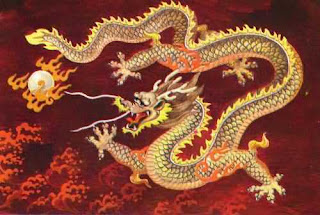
- Worship of Nature (Tín ngưỡng sùng bái tự nhiên): Vietnamese worshiped a large number of gods, especially those related to agriculture such as the sun, the moon, land, mountain, river and forest, etc... for good luck. Vietnamese often worshiped 4 deities: Cloud- Rain- Thunder- Lightning. Besides, Vietnamese also worshiped many kinds of animals such as toad, buffalo, snake, crocodile… but the most common is Fairy Dragon (Rồng Tiên).

- Worship of People (Tín ngưỡng sùng bái con người)
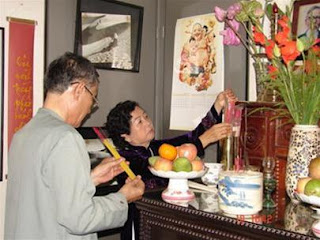
Vietnamese practices the cult of ancestors which some persons would ascribe to Chinese cultural influences. In fact, the cult of ancestors has existed for a long time among the inhabitants of Vietnam. Chinese cultural influence has only given more emphasis to it. The cult of ancestors has been called “Đạo ông bà”, as a religion in Vietnam.

A communal house (Thành Hoàng) exists in every village of Northern and Central Vietnam. The community house is the place where the villagers gather to discuss their own problems and where the village genie is worshiped.


Hồn (Spirit) and Vía: Vietnamese has believed that a person has 2 parts: body and spirit. Vía is considered as a intermediary part between body and spirit. Vietnamese man has 3 hồn and 7 vía while a woman has 3 hồn and 9 vía. 7 vía are 2 ears, 2 eyes, 2 nostrils and the mouth but a woman has more two vía- 2 nipples.

Four Immortal Deities (Tứ Bất Tử): Tan Vien represents for the resistance of calamity and flood, Thanh Giong- the resistance of foreign invaders, Chu Dong Tu- the prosperity of things and Lieu Hanh- the prosperity of morality.

2. Vietnamese Religions: Viet Nam has a diverse mix of major religions with a large number of followers, religious figures, and monks such as Buddhism, Christianity and Muslim and some indigenous religions such as Caodaism and Hoa Hao…

- Buddhism: There are two sects of Buddhism: Mahayana and Theravada (Hinayana). Mahayana Buddhism was introduced in Viet Nam in the 2nd century B.C, and Theravada was introduced in Viet Nam in the 2nd century A.D. After the 10th century, Buddhism developed very quickly in Viet Nam and became the national religion under the Ly-Tran dynasty.


- Catholicism: Catholicism was introduced in Viet Nam in the 15th century by European missionaries. Catholicism was first popular in coastal provinces such as Thai Binh, Nam Dinh, Ninh Binh, Thanh Hoa and Nghe An, etc., then spread throughout the Red River delta and cities.


- Protestantism: Protestantism was introduced in Viet Nam in the late 19th and early 20th centuries. However, it was not until 1920 that Protestantism became popular all over the country. At present, there are one million Protestants and 500 Protestant churches in Viet Nam.

- Muslim:
Muslim religion was introduced in Viet Nam by the Cham people in the 10th and 11th centuries.

- Caodaism (Đạo Cao Đài):
Caodaism is an indigenous religion created in Tay Ninh province in 1926. Caodaism worships three Supreme Beings namely Buddha, Jesus Christ and Cao Dai God. The centre of Caodaism is Tay Ninh province.


- Hoa Hao (Đạo Hòa Hảo): Hoa Hao, also called Hoa Hao Buddhism, is another indigenous religion created in 1939 in Hoa Hao Village, Tan Chau District, An Giang Province.


References:
1. Book: Such is Vietnam, National Political Publishing House
2. Sites: www.wikipedia.com, www. vietnamembassy-cambodia.com

August 09, 2009

Vietnamese Stage Music

Vietnam Stage Music belongs to Vietnamese Traditional Music. It is now kept and being shown in theater in many special events. These are the most common ones:

1. Hát chèo: China has Peking opera, Japan has Nogaku and Vietnam has Chèo. Hát chèo is a form of generally satirical musical theatre, often encompassing dance, traditionally performed by Vietnamese peasants in northern Vietnam. It is usually performed outdoors by semi-amateur touring groups, stereotypically in a village square or the courtyard of a public building, although it is today increasingly also performed indoors and by professional performers.

An excerpt of Quan Am Thi Kinh- Bad news for the monk


(Quan am Thi Kinh tells a story of a girl, named Thi Kinh, who gets married with a rich man Thien Sy. When her husband is sleeping, she sees a mole on his face, she takes scissors and intends to trim his hair. He suddenly wakes up and thinks that she is trying to murder him. Therefore, his mother and his family put her out of the house. Lonely, she dresses as a man and goes to live in Buddhist Pagoda where she works and prays. She is named Kinh Tam. In the village, there is another girl Thi Mau who falls in love with Kinh Tam but her love is not accepted. Crazily, she has relation with a man in the same village and gets pregnant. Kinh Tam is accused of the father of the baby and she is maltreated strongly. When the baby is born, Thi Mau gives the baby back to the pagoda. Kinh Tam compassionates the baby and goes everywhere to look for milk feeding the baby. She dies 3 years later. After all, people recognize that Kinh Tam is a woman... She is called as the Bo Tat Kinh Tam- Guanyin)

2. Tuồng: It is believed that tuồng was imported from China around the 13th century when Vietnam was warring against against the Mongol Yuan Dynasty. A famous actor named Lý Nguyên Cát was imprisoned by the Vietnamese. The imperial court asked him to spread his knowledge of Chinese theatre to the children of the elite, thus explaining how tuồng had first had its beginnings in Vietnam in the royal court. Later on, it was adapted to travelling troupes who entertained commoners and peasants. Along with Hát chèo, tuồng was one of the other highly popular art forms for commoners.


3. Cải lương: can be roughly translated as "reformed theater" or "renovated theater" in English, is a form of modern folk opera in Vietnam. It blends southern Vietnamese folk songs, classical music, hát tuồng (a classical theatre form based on Chinese opera), and modern spoken drama.It originated in Southern Vietnam in the early 20th century, and blossomed in the 1930s as a theatre of the middle class during the country's French colonial period. Cải lương is now promoted as a national theatrical form. Unlike the other folk forms, it continued to prove popular with the masses as late as the 1970s and the 1980s, although it is now in decline.


4. Bài chòi: is both traditional music and game in Central Vietnam. It is often held in Vietnamese New Year Day (Tết Nguyên Đán). It consists a group of people playing the game.


5. Vọng cổ: is a Vietnamese song and musical structure used primarily in the cải lương theater music and nhạc tài tử chamber music of southern Vietnam. It was composed sometime between 1917 and 1919 by a Mr. Cao Văn Lầu (also called Sáu Lầu or Sáu Làu), of Bạc Liêu, a province in southern Vietnam (Trainor 1975). The song achieved great popularity and eventually its structure became the basis for numerous other songs. The tune is essentially melancholy in character and is sung using Vietnamese modal inflections

August 08, 2009

The Ao Dai (Long Dress) - The elegant attraction of Vietnamese women


The beauty of women dressed in “Ao Dai”always leaves a deep impression on foreign visitors to Vietnam. Girl students dressed in white long robes take to streets on the way to schools or back home, or gracefully sail on their bikes along streets. Female secretaries in delicate pastels greet you at an office door and older ladies in deep shades of purple, green or blue cut a striking pose at a restaurant dinner. The “Ao Dai” appears to flatter every figure.

Female students in Vietnam wear Ao Dai on every special occasions

Early versions of the “Ao Dai”date back to 1744 when Lord Vu Vuong of the Nguyen Dynasty decreed both men and women should wear an ensemble of trousers and a gown that buttoned down the front. However, not until 1930 did “Ao Dai”appear partly similar to its look today. Now, Men wore it less, generally only on ceremonial occasions such as weddings or funerals. During the 1950s two tailors in Saigon started producing “Ao Dai”with raglan sleeves. This creates a diagonal seam running from the collar to the underarm and this style is still preferred today
Miss Universe Vietnam 2008 - Nguyen Thuy Lam and the Ao dai in Miss Universe 2008

“Ao Dai”is made individually to fit each customer's shape to create the most graceful look. Its body-hugging top flows over wide trousers that brush the floor. The pants should reach the soles of the feet and flow along the floor. Splits in the gown extend well above waist height and make it comfortable and easy to move in.Vietnamese people adore Ao Dai so much. With Ao Dai, every Vietnamese women can show their beauty, attraction and charm.

Comfortability is always taken into account for fashions and beauty. Tailoring must ensure the wearer's freedom of movements. Despite it is a long robe, “Ao Dai”must be cool to wear. Synthetic or silk fabrics are preferred as they do not crush and are quick drying, making the “Ao Dai”a practical uniform for daily wear.

The color is indicative of the wearer's age and status. Young girls wear pure white, fully-lined outfits symbolizing their purity. Older but unmarried girls move into soft pastel shades. Only married women wear “Ao Dai”in strong, rich colors, usually over white or black pants. However, “Ao Dai”is rarely seen in places where manual work is practiced. The nineties saw a real resurgence of ao dai. It has become standard and common attire for girl students as well as female staff at offices and hotels. Traditionally, “Ao Dai”has become the most preferred dress on formal occasions.Ao Dai appears frequently in songs, poems, paitings or novels

Today, “Ao Dai”has been a bit modified. Its length is cut shorter usually just below the knee. Variations in the neck, between boat and mandarin style, are common. And even adventurous alterations such as a low scooped neckline, puffed sleeves or off the shoulder designs are appearing as ladies experiment with fashion. Color patterns are no longer rigidly controlled and accesses to new fabrics have generated some dazzling results. However, most visitors to Vietnam have highly appreciated local tailors' skills when making ao dai. It is hard to think of a more elegant, demure and charming outfit, that suits Vietnamese women of different ages, than ao dai.

Vietnamese folk songs

Now you are going to discover dozens of treasures of Vietnamese folk songs. Each region in Vietnam has it own types of folk songs. Vietnamese music varies slightly in the three regions: Bắc or North, Trung or Central, and Nam or South. Northern classical music is Vietnam's oldest and is traditionally more formal. Vietnamese classical music can be traced to the Mongol invasions, when the Vietnamese captured a Chinese troupe. Central classical music shows the influences of Champa culture with its melancholic melodies. Southern music exudes a lively attitude.

1. Northern folk songs contain Quan ho singing (in Bac Giang, Bac Ninh), Xoan singing (in Phu Tho), Hát trống quân (in nothern plain provinces from Thanh Hoa), hát xẩm (in northern plain provinces), hát dặm (in Ha Nam), Ca trù (in northern provices), chèo tàu hát dô (singing on boats). Besides, there are a lot of kinds of songs of northern ethnic groups such as: Thai (in Son La, Dien Bien, Lai Chau, Hoa Binh...), Tay and Nung (in Cao Bang, Ha Giang...), Muong (in Hoa Binh), Hmong (in Son La, Thanh Hoa...)

"Giao duyên mời trầu"- Quan họ singing

Ca trù


2. Central of Vietnam contains some types of traditional music scuh as Hò (most popular in Can Tho), Hò Trung Bộ ( a kind of Hò), Hát ví dặm (in Nghe An, Ha Tinh...), Hô bài chòi (in Quang Binh)

"Hò Giã gạo"- Hò Trung Bộ


3. Southern Vietnam consists of Hò Nam Bộ (a kind of Hò), Lý Nam Bộ (it has in 3 regions but is most popular in the South), Đờn ca tài tử (origined from Nhã nhạc in Hue and traditional literature). Besides, there are some traditional music of ethnic groups such as Ede, Bana...

"Lý ngựa ô"- Lý Nam Bộ


Nowadays many modern artists have covered these traditional songs which have new interesting sound.

This is a potpourri of traditional songs, "Three regions" performed by Minh Tuyet- Ha Vy- Tam Doan (these artists are living and working in C.A, USA), released by Thuy Nga production


Another potpourri of traditional songs,"Three regions", performed by a pop singer Thanh Thao (belongs her album in 2007): Download


Contact: suongcam@hotmail.com and hongngoc.nguyen241@gmail.com

Yem Dao - The indispensable dress of ancient girls


Looking back into the historic development of national dress, Vietnam not only has “Ao Dai” but also “Ao Yem” – the indispensable dress of ancient girls.

Images of graceful girls in national charming long dress have been a symbol of Vietnam. However, looking back the historic development of national dress, Vietnam not only has “Ao Dai” but also “Ao Yem” – the indispensable dress of ancient girls.


“Ao Yem” appeared in Vietnamese life in a very old day, yet, not until Ly dynasty was it basically shaped. During those days, “Ao Yem” was called “Yem”. A very simple garment consisting of a square piece of cloth with one corner cut away to fit under the woman’s throat. This scrap of fabric is secured across the chest and stomach within strings. Traditionally, this halter-top was worn beneath a shirt, the flaps of which were often left unbuttoned to reveal “the ao yem”. Urban women favoured white, pink or red ones, while those in the suburb preferredbrown or beige, suited for their rustic environment.

Through the stream of history, “Ao Yem” was changing incessantly with improving design. However the revolutions of “Ao Yem” only happended at the beginning of the last century when western trousers and skirts entered Vietnam. In 17th century, “Ao Yem” did not have any big change of model. Entering 20th century, “Ao Yem” was used widespread with plentiful designs and models.

There is one kind of “Ao Yem”, which was often worn by ancient ladies, being called “Yem deo bua”. Its name derived from the fact that it has a small pocket of musk beside, which was an advantageous weapon of ancient ladies. Furthermore, “Ao Yem” created many original love stories. In the old days, when a girl dated with her boyfriend, she put a piece of betel inside her “Ao Yem”; it was called “khau trau dai yem”. Perhaps there is no kind of betel more supernatural than this one.


It is an age-old dress which is maintained until today. “Ao Yem” was used by all levels of society from working class to upper one. It was also used widespread in traditional festivals, therefore becoming the national traditional clothes of ancient ladies. While the wearers may age, the ao yem retains its timeless charm.

Today, the “Ao yem” is appreciated for its cultural and artistic values. On festive occasions, women throughout Vietnam are embracing the ao yem and other traditional clothes with renewed enthusiasm.

Welcome To Vietnam

Vietnam (Socialist Republic of Vietnam) seats on the southeastern part of Asia, has borders with China to the North, with Laos to the northwest, with Cambodia to the southwest and Eastern Sea to the east and the south. With a total area of 331,690 km2 (65th in the world), it has a population of over 86 million (the 13th most populous country in the world).


Vietnamese Motto: Independence- Freedom- Happiness
Anthem: Army march (Tiến quân ca), written and composed by Van Cao
Capital City: Hanoi
Largest city: Ho Chi Minh City, Ha Noi (from May 2008)
Official language: Vietnamese
Vietnamese Currency: VND (Đồng) (1USD=17765 VND -August 2009)
Government: Socialist Republic, single-party communist state
Independence day: 2nd September 1945 (from French)
Main Religions: Vietnamese traditions, Buddhism
Ethnic groups: 54

WELCOME TO VIETNAM VIDEO


Highest mountain: Fansipan (3143 ms)
Longest river: Red River (Sông Hồng)
Vietnamese Heritage Sites: Complex of Hue Monument (1993), Ha Long Bay (1999), Hoi An Ancient Town (1999), My Son Sanctuary (1999) and Phong Nha- Ke bang National Park (2003).

Ha Long Bay

Fansipan Mountain

My Son Sanctuary

Hoi An Ancient Town

Phong Nha- Ke bang National Park

Nhã nhạc of Hue court
(Listen to Nhã nhạc here)


Hotels in Vietnam:
Click here
Tourist Companies in Vietnam: Click here


Any questions, contact me at suongcam@hotmail.com or call me (+84) 977106548. Thanks!

August 07, 2009

Listen to "Hello Vietnam" by Pham Quynh Anh

Now, listen to a beautiful song, named "Hello Vietnam"
Written: Marc Lavoine
Artist: Pham Quynh Anh


Lyric:

Tell me all about this name, that is difficult to say.
It was given me the day I was born.

Want to know about the stories of the empire of old.
My eyes say more of me than what you dare to say.

All I know of you is all the sights of war.
A film by Coppola, the helicopter's roar.

One day I'll touch your soil.
One day I'll finally know my soul.
One day I'll come to you.
To say hello... Vietnam.

Tell me all about my colour, my hair and my little feet
That have carried me every mile of the way.

Want to see your house, your streets. Show me all I do not know.
Wooden sampans, floating markets, light of gold.

All I know of you is the sights of war.
A film by Coppola, the helicopter's roar.

One day I'll touch your soil.
One day I'll finally know my soul.
One day I'll come to you.
To say hello... Vietnam.

And Buddha’s made of stone watch over me
My dreams they lead me through the fields of rice
In prayer, in the light…I see my kin
I touch my tree, my roots,my begin

One day I'll touch your soil.
One day I'll finally know my soul.
One day I'll come to you.
To say hello... Vietnam.

One day I’ll walk your soil
One day I’ll finally know my soul
One day I’ll come to you
To say hello…Vietnam
To say xin chào… Vietnam

Introduction

Hello everybody!

We are Cam Van Suong and Nguyen Hong Ngoc, students of Hanoi University of Languages and International Studies - Vietnam National University. For a very long time, we have shared the same idea that one day we can introduce to friends all over the world the distinctive and charming beauty of Vietnamese Culture. Have you ever read the sentence: Each one is a book if you know how to read? Our knowledge about Vietnamese Culture is as limited as a book in an enormous library, but we still want to try our best to bridge the culture gaps and make Vietnam closer to all of you . It's our love and our passion for the country where we were born and grow up. We just want to caress every moment when the youth still belong to us and devote as much as possible to our beloved Vietnam. This blog just have been set up and seems very superficial. We are going to tell you about the most common knowledge of Vietnamese culture through each entry.

Visit our blog and please don't forget that the factor that we need most is the support from everyone.

Any questions, please don't hesitate to contact us


Cam Van Suong: suongcam@hotmail.com
(+84) 977 106 548!


Nguyen Hong Ngoc: hongngoc.nguyen241@gmail.com
(+84) 977 168 345!